

Sustainability · 2025
In this section48 topics
- Sustainability Policy3 items
- Sustainability Goals & UN SDGs3 items
- Policy Review3 items
- Business Value Chain1 item
- Stakeholder Analysis1 item
- Environmental Policy & Guidelines4 items
- Environmental Policy Review3 items
- Energy — Plan & Guidelines2 items
- Energy — Electricity Consumption1 item
- Energy — Fuel Consumption1 item
- Energy — Targets1 item
- Energy — Performance & Outcomes2 items
- Water — Plan & Guidelines3 items
- Water — Withdrawal, Discharge & Consumption1 item
- Water — Targets1 item
- Water — Performance & Outcomes2 items
- Waste — Plan & Guidelines3 items
- Waste — Targets1 item
- Waste — Performance & Outcomes2 items
- GHG — Plan & Guidelines3 items
- GHG — Emissions1 item
- GHG — Emissions Verification1 item
- GHG — Principles & Standards1 item
- GHG — Targets1 item
- GHG — Performance & Outcomes2 items
- Environmental Legal Incidents1 item
- Social Policy & Guidelines4 items
- Social Policy Review3 items
- Social — Principles & Standards Practised1 item
- Human Rights Due Diligence2 items
- Employees — Plan & Guidelines4 items
- Employees — Workforce2 items
- Employees — Remuneration & Provident Fund2 items
- Employees — Training & Development1 item
- Employees — Occupational Health & Safety1 item
- Employees — Labour Relations1 item
- Employees — Employee Representation1 item
- Employees — Targets2 items
- Employees — Performance & Outcomes2 items
- Customers — Plan & Guidelines3 items
- Customers — Satisfaction Results1 item
- Customers — Targets1 item
- Customers — Performance & Outcomes1 item
- Community & Social — Plan & Guidelines3 items
- Community & Social — Targets1 item
- Community & Social — Performance & Outcomes2 items
- Other Social Management1 item
- Law Violation Incidents1 item
Sustainability Policy
Has a Sustainability Policy
Yes
Policy Description
The Company operates its business by adhering to the core principle of providing the highest quality medical services to patients in all situations, which aligns with sustainable business operations (Sustainable Business) amidst rapidly changing investment contexts and societal expectations. Currently, institutional investors worldwide have adopted ESG (Environmental, Social and Governance) principles as crucial criteria for investment consideration. Concurrently, patients, personnel, partners, and communities expect healthcare organizations to operate responsibly towards society and the environment, by disclosing information transparently, measurably, and with continuous development.
For the Company, sustainability is not merely a concept integrated into business operations, but rather an integral part of good corporate governance. An organization that continuously develops its personnel's capabilities can effectively provide services to patients. Concurrently, efficient energy and waste management helps reduce operational costs and mitigate environmental risks. Furthermore, a robust governance system enhances trust among all stakeholders. These factors are crucial reasons why the Company has prioritized and invested significantly in enhancing its ESG performance during 2024–2025.
The content in this Chapter 3 presents a comprehensive and transparent report on sustainability performance, referencing the FTSE Russell ESG Data Model v1.1 assessment framework, which evaluates performance across 8 themes applicable to
ICB Industry Group 4533 Health Care Providers, comprising 55 key indicators.
Policy Document Link
https://investor.ram-hosp.co.th/en/corporate-governance/policies-and-document
Sustainability Goals & UN SDGs
Has Sustainability Goals
Yes
Goals Description
Sustainability Plan A.D. 2026 – 2029
The company's 4-year sustainability plan is designed to be closely linked with its business strategy and investment plans. The company prioritizes ESG as a strategic investment that creates long-term value and returns across economic, social, and sustainable business dimensions.
|
Term |
Year |
Key ESG Goals |
Investment (million Baht) |
Achievement Indicators |
|
Short-term |
2026 |
Prepare 3-year retrospective Carbon Footprint Report | Officially set GHG Target | First submission to FTSE Russell | Disclose OHS statistics | Develop HRDD Framework |
|
~5 |
≥ 34 indicators |
|
Mid-term I |
2027 |
Install Solar Rooftop NPV 28.2 million Baht | Replace all building LEDs NPV 10.1 million Baht | Apply for ISO 14001 certification | Disclose TCFD Partial Disclosure |
~42 |
≥ 42 indicators |
|
Mid-term II |
2028 |
VRF Air Conditioning System NPV 30.3 million Baht | External Verification GHG | TCFD Full Disclosure | Upgrade Clinical Services 48 million Baht |
~80 |
≥ 49 indicators |
|
Long-term |
2029 |
Net-Zero Roadmap to 2050 | ESG Rating ≥ 3/5 for all themes | Scope 3 Full Disclosure | FTSE4Good Thailand Inclusion |
~10 |
≥ 53 indicators (96%) |
UN Sustainable Development Goals
| SDG Goal |
|---|
| Goal 5 Gender Equality |
| Goal 10 Reduce Inequalities |
| Goal 12 Responsible Consumption and Production |
| Goal 13 Climate Action |
| Goal 17 Partnerships for the Goals |
Policy Review
Policy Reviewed This Year
Yes
Policy Changed This Year
Yes
Review Details
In 2025, the company prepared a comprehensive and transparent sustainability performance report, referencing the FTSE Russell ESG Data Model v1.1 assessment framework, which assesses performance across 8 themes applicable to the ICB Industry Group 4533 Health Care Providers, comprising 55 key indicators.
Business Value Chain
Value Chain Description
The Company's value chain has unique characteristics that differ from general businesses, as healthcare services, which are the primary outcome of a hospital, require expertise, credibility, and high standards of care. Therefore, the Company emphasizes the comprehensive integration of its value chain, from upstream resource management and standardized operational processes to the delivery of quality and measurable health outcomes. At each stage, the Company systematically manages ESG issues to support sustainable business operations.
|
Upstream
|
Operations |
Core Services |
Value-Added Services |
Outcomes |
|
|
|
|
|
|
ESG Risks:
|
ESG Risks:
Waste OHS Infection Control |
ESG Risks: Patient Safety Infection PDPA Privacy |
ESG Opportunities: Digital Health Green Hospital AI-Assisted Care Preventive Medicine |
KPI:
|
Stakeholder Analysis
Stakeholder Analysis
| Stakeholder Type | Stakeholders | Stakeholder Expectations | Response to Expectations | Communication Activities |
|---|---|---|---|---|
| Internal stakeholders | 2904 · Description: Investors or investment institutions · 2913 · Description: Shareholders | Stable long-term returns Reliable and comparable ESG disclosures Systematic risk management Anti-corruption | Focus on sustainable business operations, coupled with efficient cost and investment management, to generate stable long-term returns. Disclose ESG information transparently, systematically, and in accordance with international standards to ensure reliability and comparability within the same industry. Implement holistic risk management by continuously identifying, assessing, and monitoring risks, and establishing appropriate control measures. Clearly define anti-corruption policies and measures, promote an organizational culture committed to integrity, and establish an effective whistleblowing system and audit mechanisms. | 2944 · Description: Annual General Meeting (AGM) · 2949 · Other name: Meeting with Securities Analysts · Description: Others |
| External stakeholders | 2923 · Description: Customers · 2936 · Other name: Patient and family · Description: Others | - Quality and safe services - Price and health information - Appropriate costs - Protection of privacy rights | - Aims to provide medical services according to professional standards, prioritizing patient safety. - Clearly disclose service fees and relevant medical information to enable patients to make informed decisions. - Set appropriate service fees, consistent with the quality of treatment, and consider patient accessibility. - Prioritize the protection of patients' personal and health information, strictly adhering to relevant laws and standards. | 2941 · Description: Online Communication · 2945 · Description: Complaint Reception · 2947 · Description: Satisfaction Survey |
| Internal stakeholders | 2921 · Description: Employees | - Fair and competitive compensation - Safe working environment - Clear career development opportunities - Treatment with dignity | Establish a compensation structure that is appropriate, fair, and competitive with the labor market to attract and retain high-potential personnel. Prioritize occupational health and safety by implementing risk prevention measures and continuously promoting a safe working environment. Support the development of personnel capabilities through training, learning, and systematic career path planning. Promote equitable treatment of personnel, respect rights, and adhere to the principles of diversity and non-discrimination within the organization. | 2942 · Description: Internal Meeting · 2946 · Description: Employee Engagement Survey · 2947 · Description: Satisfaction Survey · 2948 · Description: Training / Seminar · 2949 · Other name: Grievance Channel for Employees · Description: Others |
| External stakeholders | 2899 · Description: Suppliers | - Fair and transparent contracts- Timely payments- Long-term cooperation- Reasonable ESG requirements | Develop clear, fair, and verifiable contracts by setting transparent terms and conditions. Strictly adhere to agreed payment terms to foster trust and business relationships. Aim to build long-term relationships with partners based on trust and mutual growth. Reasonable ESG Requirements: Establish appropriate ESG guidelines for partners, consistent with international standards, and considering their capacity for implementation. | 2943 · Description: External Meeting · 2945 · Description: Complaint Reception · 2947 · Description: Satisfaction Survey · 2949 · Other name: Annual Partner Performance Evaluation · Description: Others |
| External stakeholders | 2902 · Description: Community · 2928 · Description: Society | Local employment Promotion and support of social and community activities Prevention of air and noise pollution Being a good neighbor | - Promote local employment to generate income and develop the economy of surrounding communities. - Continuously participate in supporting social and community activities to enhance the quality of life and well-being of people in the community, such as providing basic medical knowledge. - Operate with consideration for environmental impact, along with establishing appropriate measures to control and reduce pollution. - Aim to build good relationships with surrounding communities through transparent communication, listening to feedback, and appropriately responding to community concerns. | 2940 · Description: Social Event · 2941 · Description: Online Communication · 2945 · Description: Complaint Reception · 2948 · Description: Training / Seminar |
| External stakeholders | 2931 · Description: Government agencies and Regulators | Compliance with Public Health Laws, Healthcare Standards, Corporate Governance and Transparency, Full Tax Compliance | - Conduct business by strictly adhering to and complying with relevant public health laws and regulations. - Provide medical services in accordance with professional standards and accepted AACI practices to ensure patient quality and safety. - Operate under the principles of good corporate governance, emphasizing transparency, accountability, and responsibility towards all stakeholders. - Comply with tax laws accurately, completely, and within the specified timeframe. | 2938 · Description: Visit · 2943 · Description: External Meeting · 2947 · Description: Satisfaction Survey |
| External stakeholders | 2925 · Description: Financial institution | Solvency; Good Corporate Governance; Transparent ESG Risk Profile | - Manage liquidity and financial structure prudently to ensure timely debt repayment and maintain financial credibility. - Operate under good corporate governance principles, adhering to transparency, accountability, and verifiability. - Disclose ESG risk information systematically, clearly, and in accordance with international standards to enable stakeholders to appropriately assess risks. | 2938 · Description: Visit · 2943 · Description: External Meeting · 2949 · Other name: Financial institutions are requested to meet. · Description: Others |
| External stakeholders | 2926 · Description: Educational institution or academic agency | Professional standard enhancement, collaborative research and development; Exchange of medical knowledge | - Promote cooperation with partners in elevating professional standards and support joint research and development to advance medical knowledge and innovation. - Support the exchange of knowledge, experience, and best practices to continuously enhance the quality of medical care. | 2938 · Description: Visit · 2941 · Description: Online Communication · 2943 · Description: External Meeting · 2948 · Description: Training / Seminar |
Environmental Policy & Guidelines
Has an Environmental Policy
Yes
Policy Description
The Company recognizes that operating a hospital business is unique, as it requires continuous provision of medical services throughout 24 hours, resulting in high consumption of energy, water, and resources. Therefore, the Company prioritizes environmental management alongside maintaining continuity and safety in patient care, focusing on efficient resource utilization, managing medical waste according to relevant standards, and complying with environmental laws, while continuously developing operational guidelines to support long-term sustainable growth.
In addition, the Company prioritizes preparedness for the impacts of climate change and disasters that may affect medical services, by establishing emergency management guidelines for events such as floods and severe weather, referencing lessons learned from the great flood of 2011, to enhance infrastructure readiness, stock equipment and medical supplies, conduct regular emergency response drills, and coordinate with government agencies, ensuring the hospital can effectively maintain service continuity.
Policy Document Link
https://investor.ram-hosp.co.th/en/corporate-governance/policies-and-document
Environmental Guidelines
| Guideline |
|---|
| Electricity Management |
| Water Management |
| Waste Management |
| Air Quality Management |
Environmental Policy Review
Policy Reviewed This Year
Yes
Review Details
Energy management in hospitals is more complex than in general businesses because it requires continuous control of temperature and humidity, constant support for medical equipment, and responsiveness to fluctuating electricity demands based on seasons and patient numbers. Based on the assessment results in 2025, the company has reviewed its environmental policies, practices, and/or targets, including GHG reduction targets and action plans.
The company has set a target to reduce GHG by 5% within 5 years, using 2025 as the base year with emissions of 30,173 tCO2e. This means the target for 2030 is to emit less than 28,665 tCO2e. This target is challenging but achievable with planned measures. However, the company plans to review and elevate its targets to align with Science-Based Targets (SBTs) after officially completing its Carbon Footprint Report in 2026.
| Measures | GHG Reduction (tCO 2 e/year) | Investment (Million Baht) | NPV (Million Baht) | Payback Period | Target |
| Solar Rooftop — Installation of solar panels on the main building's roof | ~1,200 | ~18 | 28.2 | ~7 years | 2027 |
| LED Retrofit — Replace light bulbs | ~400 | ~8 | 10.1 | ~5 years | 2027 |
| VRF — High-efficiency Variable Refrigerant Flow air conditioning system | ~600 | ~30 | 30.3 | ~8 years | 2028 |
| Behavioral Conservation — Campaign to reduce energy consumption through behavioral changes | ~100 | | | Immediately | 2026 |
| Low-GWP Refrigerant — | ~50 | ~2 | | ~4 years | 2027–2028 |
| Total measures | ~2,350 | ~58 | ~68.6 | | 2026–2028 |
In addition, the company has concretely integrated the principles of the Circular Economy (CE) into its hospital operations through 4 main strategies, aiming to transition from a linear economic model (Linear Economy: Take-Make-Dispose) to a system where resources circulate and create value for longer. In 2025, the company achieved a Waste Recovery Rate of 7.6%, which, although still low compared to long-term goals, demonstrates a clear path for development.
Operating under the circular economy concept in a hospital context must prioritize patient safety. Therefore, reusing or recycling materials must strictly adhere to sterilization standards, and suitability must be considered, taking into account life-cycle costs, infection risks, and environmental impacts. The company thus proceeds cautiously, continuously developing control and monitoring systems.
| CE Strategy | Projects/Activities | Quantitative Results for 2025 | Economic Value |
| Reduce | Adjust clinical processes to reduce infectious waste generation, campaign to reduce unnecessary packaging, use reprocessable equipment instead of single-use. | Infectious waste decreased by 18.5% (-32,105 kg) |
|
| Reuse (Reusing) | Fabric-to-Fuel project converting fabric | Old fabric entering the Fabric-to-Fuel system instead of landfills | Reduce procurement costs and reduce GHG from new production processes |
| Recycle (Recycling) | Separate and sell recyclable materials (paper, plastic, metal, glass) to buyers | Sold 61,549.3 kg of recyclable waste, generating 111,569 Baht in revenue in 2025, an increase of 25.8% compared to 2024, which generated 88,664.5 Baht. | Generate additional revenue of 22,904 Baht |
| Compost (Fertilizer composting) | Project for composting wet waste from the kitchen and garden into biocompost for internal hospital use | Wet waste 34,708 kg | Reduce fertilizer purchase costs, reduce GHG from decomposition in landfills (Methane Avoidance) |
| Community CE (Circular Community) | Project "Send Waste Home, Reduce Greenhouse Gases" and inviting patients and personnel to return QR Code Sealer materials for pharmaceutical packaging | Personnel and patients participate in community recycling systems, fostering ESG awareness. | Reduce community GHG |
Policies & Guidelines Changed
| Change |
|---|
| Electricity Management |
| Water Management |
| Waste Management |
| Air Quality Management |
Energy — Plan & Guidelines
Has an Energy Management Plan
Yes
Plan Description
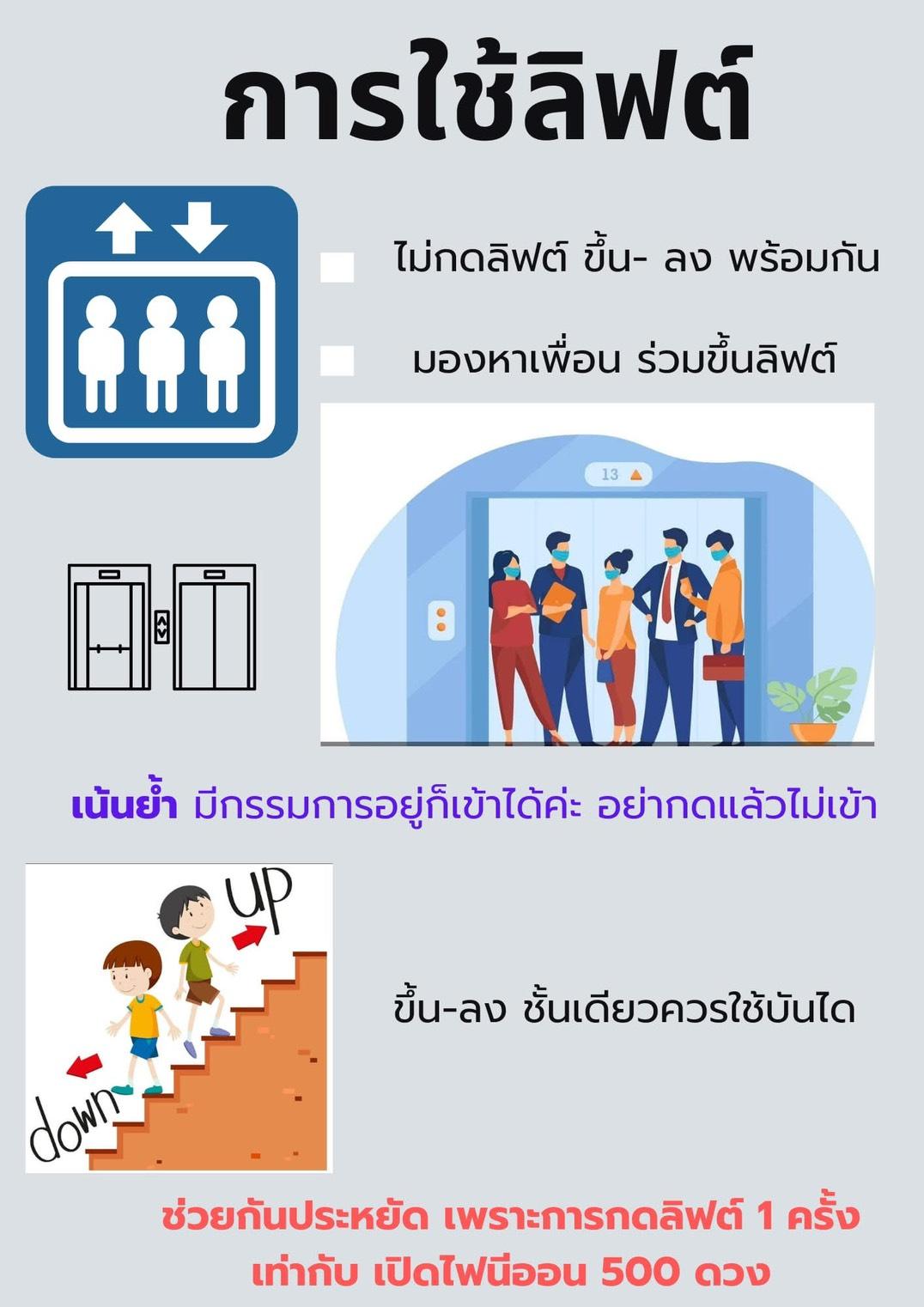
The company has implemented an internal energy conservation promotion project with the objective of raising awareness and instilling efficient energy usage habits among employees at all levels. This project encompasses campaigns to promote valuable resource utilization, reduce unnecessary energy consumption, and apply environmentally friendly practices in daily operations, which will lead to a reduction in the organization's energy costs and support sustainable business operations in the long term. 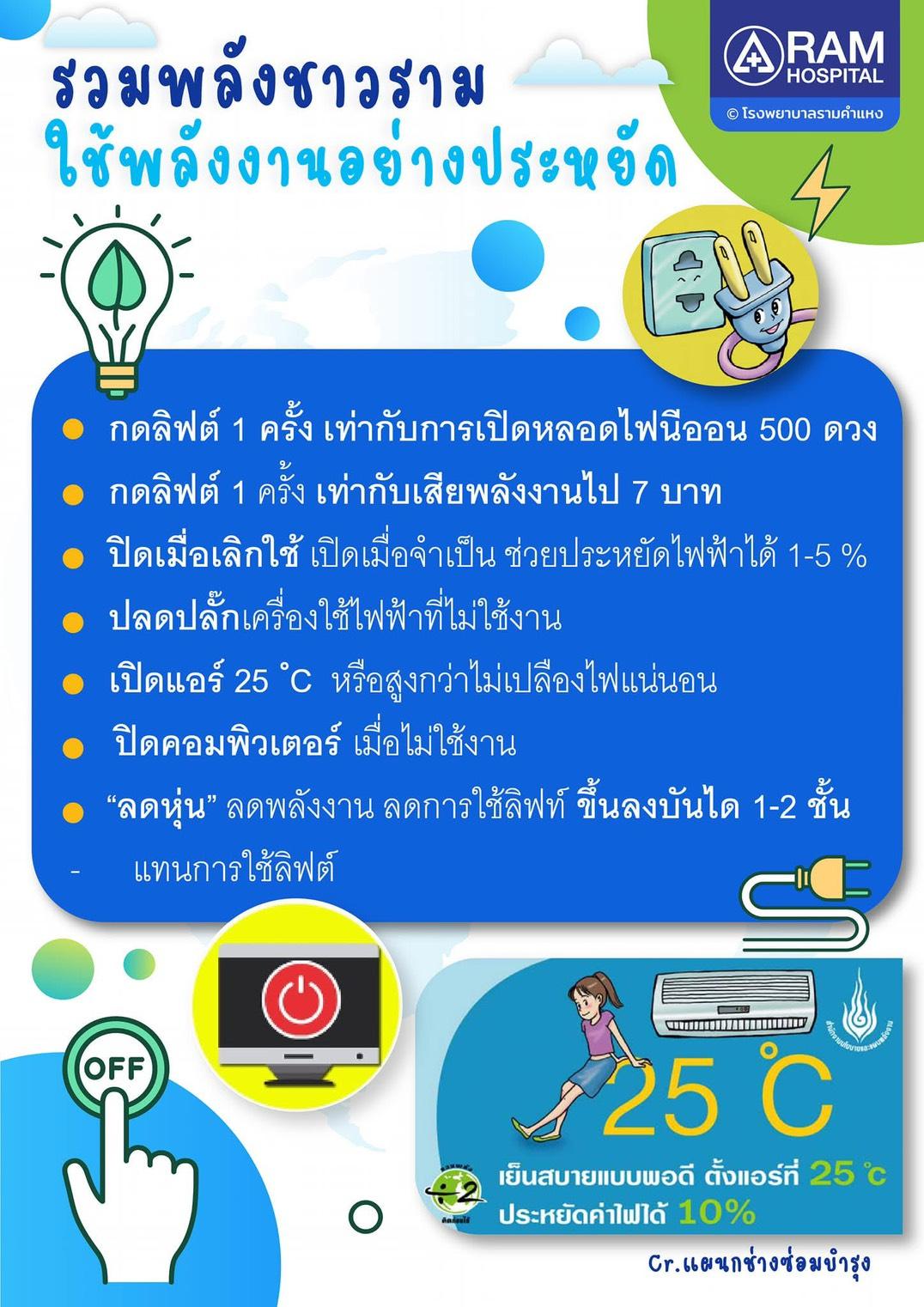
Energy — Electricity Consumption
Electricity Consumption
| Metric | Current Year | Two Years Ago | Remark |
|---|---|---|---|
| Total electricity consumption within the organization (Kilowatt-Hours) | 12,601,005 | 12,263,077 | Calculated based on an electricity cost of 4.20 Baht per unit. |
| Electricity purchased for consumption from non-renewable energy sources (Kilowatt-Hours) | |||
| Electricity purchased or generated for consumption from renewable energy sources (Kilowatt-Hours) |
Energy — Fuel Consumption
Fuel Consumption
| Metric | Current Year | Previous Year |
|---|---|---|
| Crude oil (Barrels) | 0 | 0 |
| Coal (Metric tonnes) | 0 | 0 |
| Jet fuel (Litres) | 0 | 0 |
| Diesel (Litres) | 33,552.91 | 42,310.11 |
| Gasoline (Litres) | 4,187.66 | 0 |
| Fuel oil (Litres) | 0 | 0 |
| Natural gas (Standard cubic feet) | 0 | 0 |
| LPG (Kilograms) | 2,000 | 2,448 |
| Steam (Metric tonnes) | 0 | 0 |
Energy — Targets
Has Set Targets
No
Energy — Performance & Outcomes
Has Performance Results
Yes
Performance Description
The hospital's energy management performance over the past year reflects systematic operations, with measures and guidelines established for controlling and reducing energy consumption in various organizational processes. These include improving the efficiency of medical equipment and utility systems, campaigning to raise awareness among personnel for appropriate energy use, and continuously monitoring and evaluating energy consumption.
As a result of these operations, the hospital has been able to control energy consumption at an appropriate level, consistent with the increased volume of medical services. It has also helped reduce unnecessary energy consumption and enhance overall resource efficiency, leading to energy costs tending to remain stable or decrease in some areas. Furthermore, it supports the reduction of environmental impact and strengthens the organization's image in terms of social responsibility and sustainable business practices.
Water — Plan & Guidelines
Has a Water Management Plan
No
Plan Description
In 2025, the company implemented water management. In the hospital context, water usage is diverse, encompassing medical processes, general services, and wastewater management from medical treatments that may contain chemical or microbial contaminants. Therefore, the company conducted a water risk assessment using the WRI Aqueduct 4.0 tool, an international standard for evaluating water stress levels.
| Water indicators | Measured values | Benchmark | Status | Implications for management |
| Baseline Water Stress (BWS) | 1.4 / 5 | Less than 2.0 | Low | Risk of water shortage |
| Total water utility cost (2025) | 2,280,180.84 Baht | | | 15 meters, 3 branches, average 190,015 Baht/month |
| Maximum water usage | 201,093 Baht (Oct.) | | | High water usage during Sep–Oct. |
| Wastewater quality | Passed all parameters | Pollution Control Department standards | Passed | Confirmed that the wastewater treatment system operates according to standards, causing no water pollution to the community. |
| Target | Being defined | Reduced by 5% by 2029 | Developed | Promote efficient water usage within hospital buildings and raise awareness about water resource conservation. |
The hospital's main water meters are located in Building A and Building B, with a combined water usage cost of approximately 135,000–155,000 Baht per month, accounting for over 70% of the total water bill. Meanwhile, the laundry building has a water usage cost of 5,929–7,944 Baht per month, reflecting water usage in medical linen washing processes. Staff dormitories and support areas have water usage costs of approximately 15,000–20,000 Baht per month.
Plan Document Link
https://investor.ram-hosp.co.th/en/corporate-governance/policies-and-document
Water — Withdrawal, Discharge & Consumption
Water Withdrawal, Discharge & Consumption
| Metric | Current Year | Previous Year |
|---|---|---|
| Total water withdrawal (Cubic meters) | 142,511.3 | 118,528 |
| Total water withdrawal by third-party water (Cubic meters) | 142,511.3 | 118,528 |
| Total water withdrawal by surface water (Cubic meters) | ||
| Total water withdrawal by groundwater (Cubic meters) | ||
| Total water withdrawal by seawater (Cubic meters) | ||
| Total water withdrawal by produced water (Cubic meters) | ||
| Percentage of wastewater treated before discharge (%) | 100 | 100 |
| Total water discharge (Cubic meters) | 142,511.3 | 118,528 |
| Total water discharge to third-party water (Cubic meters) | ||
| Total water discharge to surface water (Cubic meters) | ||
| Total water discharge to groundwater (Cubic meters) | ||
| Total water discharge to seawater (Cubic meters) | ||
| Total water consumption (Cubic meters) | 0 | 0 |
| Recycled water (Cubic meters) | 0 | 0 |
Water — Targets
Has Set Targets
No
Water — Performance & Outcomes
Has Performance Results
No
Performance Description
The Company has promoted efficient water usage within the hospital buildings through the development of public relations materials and awareness campaigns to foster understanding of water resource conservation among personnel and service users. Furthermore, there is a plan to continuously develop water-saving campaign projects in 2026 to support the organization's sustainable business operations.
Waste — Plan & Guidelines
Has a Waste Management Plan
Yes
Plan Description
The Company recognizes its responsibility in managing hazardous waste generated from medical services, particularly infectious waste and chemicals, which could potentially impact communities and the environment if not properly managed. Therefore, it implements a systematic waste management process, encompassing segregation at the source, secure storage, transportation by authorized service providers, and final disposal in accordance with established standards.
Plan Document Link
https://investor.ram-hosp.co.th/en/corporate-governance/policies-and-document
Waste — Targets
Has Set Targets
No
Waste — Performance & Outcomes
Has Performance Results
Yes
Performance Description
Waste Type | Year 2024 (kg) | <68Xssv6hp8Vg> | Change | Management Cost 2025 (Baht) | Disposal Method |
| Chemical Waste | 467.7 | 415.7 | Decreased by 11.1% | including hazardous waste | Sent to licensed disposal companies by the Department of Industrial Works |
| Hazardous Waste | 12,975.2 | 12,658.7 | Decreased by 2.4% | 402,855 | Including chemical waste and |
| Infectious Waste | 173,893.7 | 141,788.7 | Decreased by 18.5% | 792,690 | High-temperature incinerator ≥850C or standard Autoclave |
| General Waste | 644,678 | 599,213.5 | Decreased by 7.1% | 264,000 | BMA/Municipality Standard Landfill |
| Recyclable Waste | 62,260.5 | 61,549.3 | Decreased by 1.1% |
| Sold to licensed buyers |
| Wet Waste (Organic/ | 0 | 34,708 | New in 2025 | 0 (very low cost) | Biocompost |
| Total | 894,275.1 | 850,333.9 | Decreased by 4.9% | 1,459,545 | |
The volume of infectious waste decreased by 18.5% or 32,105 kilograms, positively impacting both the environment and costs. This is because the disposal cost of infectious waste (approximately 5.59 Baht per kilogram) is significantly higher than that of general waste (0.44 Baht per kilogram). These results are attributed to staff training on waste segregation, improvements in clinical processes to reduce waste generation at the source, and the appropriate reuse of sterilized medical equipment. Concurrently, hazardous waste (including chemicals) decreased by 14.8%, which helps reduce the company's environmental and legal risks. In 2025, the company generated revenue from the sale of recyclable materials totaling 111 ,569 Baht, an increase of 25.8% from the previous year, reflecting the improved efficiency of the segregation system. Meanwhile, the total waste management cost was 1,459,545 Baht, increasing by only 2.5% despite a change in general waste service providers late in the year, demonstrating effective cost management.
GHG — Plan & Guidelines
Has a GHG Management Plan
Yes
Plan Description
The company has systematically developed a greenhouse gas management plan, which has been published on the company's website. Additionally, relevant working groups have been established, and all employees have been informed and encouraged to participate thoroughly in the operations.
The company has set a target to reduce GHG by 5% within 5 years, using 2025 as the base year with emissions of 30,173 tCO2e. This means the 2030 target is to emit less than 28,665 tCO2e. This target is challenging but achievable with the planned measures. However, the company plans to review and elevate its targets to align with Science-Based Targets (SBTs) after officially preparing the Carbon Footprint Report in 2026.
| Measures | GHG reduction (tCO 2 e/year) | Investment (million Baht) | NPV (million Baht) | Payback period | Target |
| Solar Rooftop — Installation of solar panels on the main building's roof | ~1,200 | ~18 | 28.2 | ~7 years | 2570 |
| LED Retrofit — Replacing light bulbs | ~400 | ~8 | 10.1 | ~5 years | 2570 |
| VRF — High-efficiency Variable Refrigerant Flow air conditioning system | ~600 | ~30 | 30.3 | ~8 years | 2571 |
| Behavioral Conservation — Campaign to reduce energy consumption through behavioral changes | ~100 | | | Immediately | 2569 |
| Low-GWP Refrigerant — | ~50 | ~2 | | ~4 years | 2570–2571 |
| Total measures | ~2,350 | ~58 | ~68.6 | | 2569–2571 |
Plan Document Link
https://investor.ram-hosp.co.th/en/corporate-governance/policies-and-document
GHG — Emissions
GHG Emissions
| Metric | Current Year | Previous Year | Two Years Ago |
|---|---|---|---|
| Total GHG emissions (Metric tonnes of carbon dioxide equivalent) | 37,595 | 6,753 | 0 |
| Total greenhouse gas emissions 1 (Metric tonnes of carbon dioxide equivalent) | 5,573 | 578 | |
| Total greenhouse gas emissions 2 (Metric tonnes of carbon dioxide equivalent) | 25,140 | 6,080 | |
| Total greenhouse gas emissions 3 (Metric tonnes of carbon dioxide equivalent) | 6,882 | 95 |
GHG — Emissions Verification
Emissions Verified by a Third Party
No
GHG — Principles & Standards
Principles & Standards Applied
| Standard |
|---|
| 2671 |
| 2672 |
| 2674 |
| 2676 |
GHG — Targets
Has Set GHG Targets
No
GHG — Performance & Outcomes
Has Performance Results
Yes
Performance Description
The company has calculated its organizational greenhouse gas emissions, covering all three scopes (Scope 1, Scope 2, and Scope 3). It was found that in 2025, the organization's total greenhouse gas emissions amounted to 37,595 tons of carbon dioxide equivalent (tCO2eq), which is an increase of 30,478 tons of carbon dioxide equivalent (tCO2eq) compared to 2024. This increase in greenhouse gas emissions is not solely due to an increase in emission-generating activities, but primarily stems from the hospital's emphasis and commitment to developing a more complete and comprehensive greenhouse gas data collection system. In 2025, data on activities related to greenhouse gas emissions across all scopes were collected and recorded in greater detail and completeness than in the previous year, resulting in data that more accurately and closely reflects the organization's greenhouse gas emission situation.
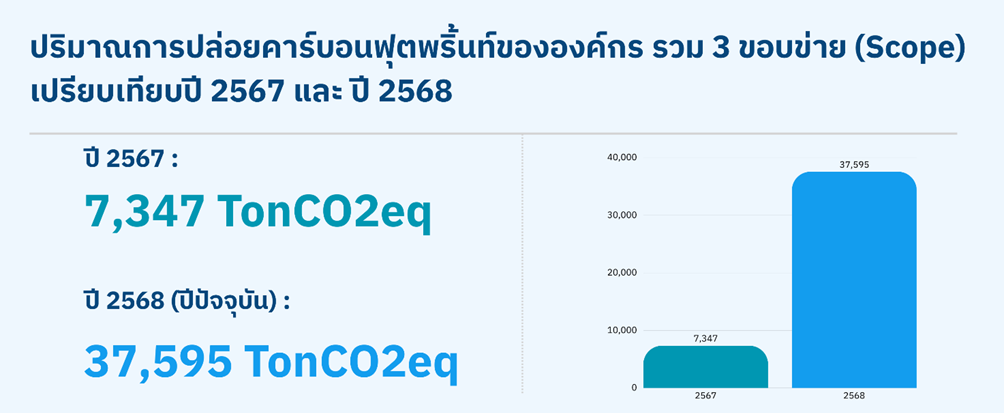
The company therefore designates the results of the greenhouse gas emission calculation for the year 2025
serves as a baseline for monitoring, analyzing, and systematically planning the management of the organization's greenhouse gas emissions reduction in the following year.
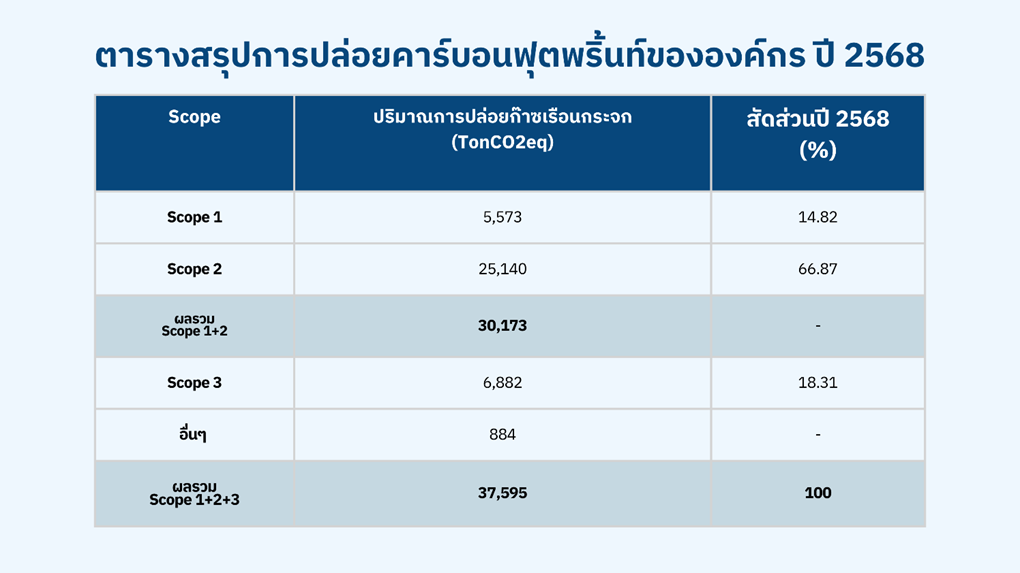
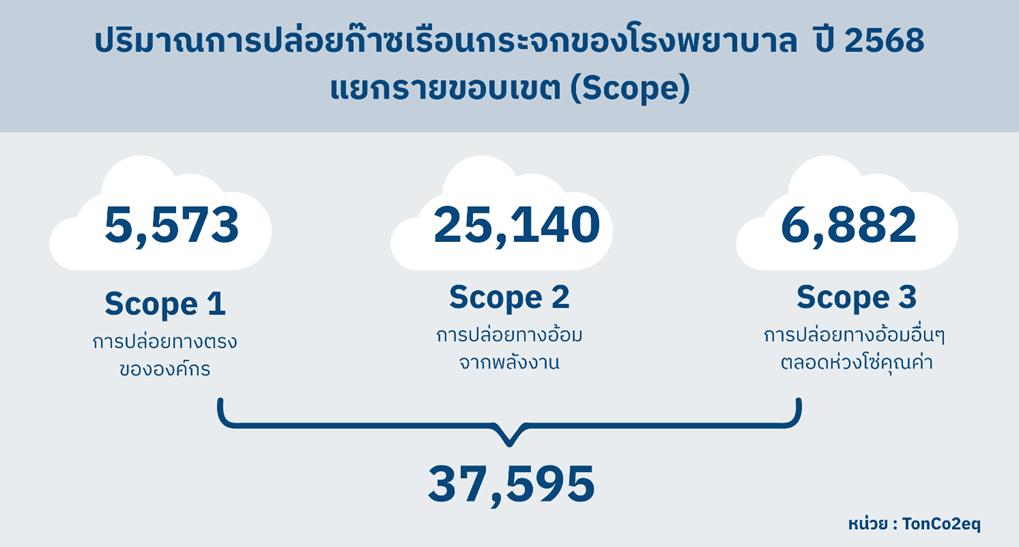
| 52.92 million Baht/year Total electricity cost | 5,573 tCO2e (14.82%) GHG Scope 1 Direct |
tCO2e (66.87%) GHG Scope 2 Indirect | 37,595 Total tCO2e GHG Base Year 2025 |
The company's greenhouse gas emission structure, with Scope 2 accounting for as high as 66.87% of total emissions, reflects the unique nature of the hospital business, which primarily relies on electricity consumption. This includes large air conditioning systems, medical equipment requiring continuous operation, lighting systems in medical areas, and various support systems. The high proportion of Scope 2 emissions is therefore crucial strategic information, as investments in renewable energy, such as Solar Rooftop, and improvements in energy efficiency, such as switching to LED and VRF systems, can significantly reduce greenhouse gas emissions. Furthermore, changes in Carbon Intensity
within Thailand's electricity grid, according to the proportion of renewable energy in the system, also directly impacts the company's Scope 2 emissions. Therefore, it is a crucial factor that requires continuous monitoring and management.
Environmental Legal Incidents
Legal Violation Incidents
| Metric | Current Year | Previous Year | Two Years Ago |
|---|---|---|---|
| Number of cases or incidents of legal violations or negative environmental impact (cases) | 0 | 0 | 0 |
Employees — Plan & Guidelines
Has an Employee Management Plan
Yes
Plan Description
In 2025, the company had a total of 1,933 employees. The personnel structure reflects the unique characteristics of the public health sector, which relies significantly on medical personnel, especially professional nurses.
| Personnel Indicators | Year 2024 | Year 2025 |
| Total employees | 1,903 | 1,933 |
| Male employees | 267 | 262 (13.6%) |
| Female employees | 1,636 | 1,671 (86.4%) |
| Employees with disabilities (direct hire) | 2 | 2 |
| Total employment of persons with disabilities (fund) | 19 | 19 |
| Contribution to Disability Fund (Baht) | 1,985,913 | 2,168,100 |
The proportion of female employees in the company aligns with the structure of Thailand's private hospital industry, which heavily relies on professional nursing personnel. The company adheres to the principle of employment based on knowledge, ability, and qualifications, without gender-based quotas, and promotes an equitable working environment for all genders at all levels of positions. For the employment of persons with disabilities, the company directly employs 2 individuals and supports 19 individuals through a fund.
Compensation and Benefits
The company recognizes that competitive compensation and comprehensive benefits are crucial factors in retaining quality personnel, especially in the highly competitive public health sector for attracting specialist doctors and specialized nurses. Appropriate compensation therefore helps support the reduction of turnover rates, lowers the costs of recruiting and developing new personnel, and enhances the quality of services.
| Type of Compensation/Benefits | Year 2024 | Year 2025 | Changes | Covered |
| Total Salary and Compensation | 62,780,464 Baht/month | 66,207,100 Baht/month | Increased by 5.5% | All employees |
| Male employee compensation | 10,423,579 Baht | 11,066,505 Baht | Increased by 6.2% | Male employees |
| Average compensation per person (Ram) | ~32,987 Baht/month | ~34,251 Baht/month | Increased by 3.8% | Average across all levels |
| Social Security | As per Act (5%) | As per Act (5%) | | All employees |
| Provident Fund | Implemented | Implemented | | Permanent employees |
| Group health insurance | Implemented | Implemented | | Employees and families |
| Staff accommodation (3 dormitories) | Implemented | Implemented | | Personnel requiring accommodation |
| Annual health check-up | Implemented | Implemented | | All employees |
The annual 5.5% increase in total compensation, which is higher than Thailand's inflation rate in 2025, reflects the company's commitment to preserving the purchasing power and quality of life of its personnel. Furthermore, the company provides accommodation benefits through three dormitories near the hospital, which is highly valuable in the context of Bangkok's high rental costs and also enables personnel to respond quickly to emergency operations, which is crucial for medical service delivery.
Personnel Development through Training
102 courses, total 55,184 hours, average 120 hours/person/year in 2025
Investment in Human Capital is a top priority in the company's social strategy. In 2025, a total of 102 training courses were conducted, accumulating 55,184 training hours, averaging 120 hours per person per year for participants. This figure is significantly higher than the general standard in Thailand's healthcare sector, which is approximately 30–50 hours per person per year, and more than 12 times higher than the Nursing Council's minimum requirement of 50 CPD hours over 5 years (or 10 hours per year), reflecting the organization's commitment to investing in personnel development beyond minimum standards.
External training — 54 courses
Internal training — 48 courses
The results of internal training in 2025 reflect the development of organizational capabilities in several areas, including enhancing patient safety, strengthening service culture, and technological readiness through BLS/CPR, Service Excellence, and Smart Hospital & AI courses, which support the quality of services and adaptation to the digital healthcare system.
Occupational Health and Safety
The company operates in occupational safety, health, and working environment (OHS) in accordance with the Occupational Safety, Health, and Environment Act B.E. 2554 (2011). The main mechanism for this is the Safety Committee (OHS Committee), which comprises employer and employee representatives in proportions stipulated by law. In 2025, the company organized a 2-day training for 30 members of the OHS Committee to enhance their knowledge of OHS laws, risk assessment, and emergency management in the workplace.
| OHS Indicators | Performance Results Year 2025 | Context and Significance | FTSE Status |
| OHS Committee members trained | 30 people, 2-day training, Aug 2025 |
| Completed |
| Firefighting and Fire Evacuation | 2 batches, total 174 people, Nov 2025 | Basic skills for new employees, reducing losses | Completed |
| Annual BLS/CPR | 4 times | Renew life-saving skills, reduce risk to patient lives in emergencies | Completed |
| ACLS Certification | 4 batches, total 116 people | Critical care specialists possess advanced, up-to-date life-saving skills | Completed |
| Infection Control ICWN | 80 people, Oct 2025 | Reduce infection risk for personnel, which is the most critical OHS issue in hospitals | Completed |
| Utility Risk Assessment | 37 departments, 8 dimensions | Identify and manage infrastructure risks affecting patient and personnel safety | Completed |
| Accident statistics LTIFR/TRIR |
| To be disclosed according to SHS10 — Scheduled Q2/2026 | Reported in Q2/2026 |
| Official OHS Policy | Under development | Must have a board-approved and publicly disclosed policy | In progress Reported in |
Occupational Health and Safety (OHS) risks in a hospital context are unique, including risks from exposure to blood and bodily fluids, medical radiation, chemotherapy drugs, and ergonomic risks from patient handling. The company therefore implements appropriate control measures, such as the use of Personal Protective Equipment (PPE), a radiation monitoring system with personal dosimeters, the use of Biological Safety Cabinets for chemotherapy drug preparation, and guidelines to prevent work-related injuries among personnel.
Plan Document Link
https://investor.ram-hosp.co.th/en/corporate-governance/policies-and-document
Plan Areas
| Plan Area |
|---|
| Fair employee compensation |
| Employee training and development |
| Promoting employee relations and participation |
| Occupational health and safety in workplace |
Employees — Workforce
Workforce — Introduction
The employee data as presented refers only to the number of employees of Ramkhamhaeng Hospital Public Company Limited.
Workforce Data
| Metric | Current Year | Previous Year | Two Years Ago | Remark |
|---|---|---|---|---|
| Total number of employees (Persons) | 1,933 | 1,903 | 7,299 | In 2025, the number of employees of Ramkhamhaeng Hospital Public Company Limited. |
| Number of male employees (Persons) | 262 | 267 | 1,168 | |
| Number of female employees (Persons) | 1,671 | 1,636 | 6,131 | |
| Total employment of disabled persons (people) | 21 | 19 | 19 | In 2025, the number of employees of Ramkhamhaeng Hospital Public Company Limited. |
| Total disabled employees (people) | 2 | 2 | 3 | |
| Total male disabled employees (people) | 1 | 1 | 1 | |
| Total female disabled employees (people) | 1 | 1 | 2 | In 2025, the number of employees of Ramkhamhaeng Hospital Public Company Limited. |
| Total disabled workers who are non-employee (people) | 19 | 17 | 16 | |
| Contributions to the fund for promoting and improving the quality of life for disabled persons | 1 | 1 | 1 | |
| Total number of male employees in operational level (Persons) | 235 | 241 | ||
| Total number of male employees in management level (Persons) | 17 | 15 | ||
| Total number of male employees in executive level (Persons) | 10 | 11 | ||
| Total number of female employees in operational level (Persons) | 1,606 | 1,576 | ||
| Total number of female employees in management level (Persons) | 63 | 58 | ||
| Total number of female employees in executive level (Persons) | 2 | 2 |
Employees — Remuneration & Provident Fund
Introduction
Compensation payment information as disclosed solely for Ramkhamhaeng Hospital Public Company Limited.
Remuneration & Provident Fund
| Metric | Current Year | Previous Year | Two Years Ago |
|---|---|---|---|
| Total disabled employees (people) | 828,398,867 | 779,711,821 | 2,124,826,535 |
| Total male employee remuneration (Baht) | 115,165,150 | 106,222,686 | |
| Total female employee remuneration (Baht) | 713,233,717 | 673,489,135 | |
| Number of employees eligible to participate in PVD (persons) | 1,900 | 0 | 0 |
| Total number of employees joining employee provident fund (Persons) | 975 | 0 | 0 |
| Percentage of total number of employees joining employee provident fund to total number of employees (%) | 0 | 0 | 0 |
| Number of PVD members / Total eligible employees (%) | 51.32 | 0 | 0 |
| Total amount of provident fund contributed by the Company (Baht) | 1,274,260 | 0 | 0 |
| Total amount of provident fund contributed by employee (baht) | 4,413,594 | 0 | 0 |
Employees — Training & Development
Training Data
| Metric | Current Year | Previous Year | Two Years Ago |
|---|---|---|---|
| Average employee training hours (Hours / Person / Year) | 6 | 6 | 6 |
| Employee development and training expenses (baht) |
Employees — Occupational Health & Safety
Occupational Health & Safety Data
| Metric | Current Year | Previous Year | Two Years Ago |
|---|---|---|---|
| Total number of lost time injury incidents by employees (Cases) | 0 | 0 | 0 |
Employees — Labour Relations
Labour Relations Data
| Metric | Current Year | Previous Year | Two Years Ago |
|---|---|---|---|
| Total voluntary resignations (Persons) | 221 | 276 | 404 |
| Male employees who voluntary resigned (Persons) | 28 | 28 | 81 |
| Female employees who voluntary resigned (Persons) | 193 | 248 | 323 |
| Percentage of employee turnover leaving the Company voluntarily (%) | 11.43 | 14.5 | |
| Evaluation result of employee engagement | 0 | 0 | 0 |
Employees — Employee Representation
Employees Are Represented Collectively
No
Employees — Targets
Has Set Employee Targets
Yes
Targets
| Indicator | Target Areas | Base Year | Base Year — Description | Target Year | Target Year — Description |
|---|---|---|---|---|---|
| Develop a systematic personnel development plan, encompassing medical, professional, and digital skills, with measurement and reporting of average training hours per personnel, in accordance with indicator SLS08. | 2990 · Other name: Personnel Skill and Potential Development (Training & Development) · Description: Others | 2,026 | Average employee training hours are not less than 6 hours per person. | 2,026 | Average employee training hours are not less than 12 hours per person. |
Employees — Performance & Outcomes
Has Performance Results
Yes
Performance Description
In 2025, a total of 102 training courses were conducted, accumulating 55,184 training hours, averaging 120 hours per person per year for participants. This figure significantly exceeds the general standard in the Thai healthcare sector, which is approximately 30–50 hours per person per year. It also surpasses the minimum requirement of the Nursing Council, which mandates 50 CPD hours over 5 years (or 10 hours per year), by more than 12 times, reflecting the organization's commitment to investing in personnel development at a level exceeding minimum standards.
External Training — 54 courses
Sending personnel for training at leading institutions such as Siriraj Hospital, Rajavithi Hospital, and King Chulalongkorn Memorial Hospital, Thai Red Cross Society, reflects the company's commitment to elevating the professional standards of its personnel to be on par with leading university hospitals.
Internal Training — 48 courses
Internal training courses are designed to meet the specific needs of Ramkhamhaeng Hospital, covering clinical skills, safety, service, and organizational development, utilizing internal resources and experts from partner institutions.
This reflects the organization's capacity development in several areas, including enhancing patient safety, fostering a service culture, and preparing for technological advancements through courses such as BLS/CPR, Service Excellence, and Smart Hospital & AI, which support the quality of service delivery and adaptation to the digital healthcare system.
Customers — Plan & Guidelines
Has a Customer Management Plan
Yes
Plan Description
The Company recognizes the importance of personal data protection and maintains appropriate and international standards for personal data security. Therefore, this Privacy Policy has been prepared and disseminated to all individuals associated with the hospital for their awareness. It shall be binding upon all executives, employees, and external personnel working for the hospital. Furthermore, executives of all departments are responsible for supporting, promoting, and monitoring operations to strictly comply with this policy and relevant personal data protection laws, as follows:
-
1. The collection of personal data shall be limited to what is necessary and for the intended purpose of use only, and shall comply with the policies, manuals, and/or guidelines established by the hospital.
-
2. The quality of collected personal data must consider accuracy and appropriateness, with appropriate measures for personal data security, risk management, and the fostering of awareness regarding personal data security.
-
3. Policies and practices related to personal data protection shall be publicized and disseminated through the hospital's website, and other matters as prescribed by law shall be implemented, such as having measures to support the exercise of data subject rights, defining the responsibilities of individuals acting as Data Controllers and Data Processors, and appointing a Data Protection Officer (DPO), among others.
-
4. All hospital personnel shall possess awareness and responsibility, ready to protect the personal data of relevant individuals as if it were their own personal data.
Plan Areas
| Plan Area |
|---|
| Protection of customer personal information |
Customers — Satisfaction Results
Customer Satisfaction Results
| Metric | Current Year | Previous Year | Two Years Ago |
|---|---|---|---|
| Evaluation results of customer satisfaction | 1 | 1 | 1 |
Customers — Targets
Has Set Customer Targets
No
Customers — Performance & Outcomes
Has Performance Results
No
Community & Social — Plan & Guidelines
Has a Community & Social Plan
Yes
Plan Description
The Company plays a role in social development at two levels: the development of human capital within the organization through investment in education and training, and participation in external community and social development through various projects.
a) Community Health Projects
-
The free health check-up project for communities around the hospital provides basic health screenings such as blood pressure, blood sugar, and body mass index, along with health consultations by doctors and volunteer personnel, to promote access to primary healthcare services for community members.
-
The health knowledge dissemination project, through social media, websites, and "Health Talk" activities by specialist doctors, aims to promote knowledge on disease prevention and healthcare to the public, while simultaneously raising awareness of the organization.
b) Community Environmental Projects
-
The "Send Waste Home, Reduce Greenhouse Gases" project encourages patients, relatives, and personnel to return recyclable materials to designated collection points within the hospital, equipped with a QR Code system for tracking volume and accumulating points, to expand sustainable waste management practices into the community and foster ESG awareness among service users.
c) Support for Persons with Disabilities and Vulnerable Groups
-
Direct employment of 2 disabled personnel and indirect support for another 19 individuals through a fund, totaling 21 individuals.
and will contribute approximately 2,168,100 Baht to the Fund for the Promotion and Development of the Quality of Life for Persons with Disabilities in 2025, which, in addition to complying with the law, also demonstrates a commitment to creating an inclusive society for all.
Plan Areas
| Plan Area |
|---|
| Education |
| Sports and recreation |
Community & Social — Targets
Has Set Community & Social Targets
No
Community & Social — Performance & Outcomes
Has Performance Results
Yes
Performance Description
Social and Community Activities
1. Ramkhamhaeng Hospital supported IT equipment for Huamark Metropolitan Police Station and provided financial support for training in the anti-drug campaign.
2. Ramkhamhaeng Hospital organized training on "Basic Life Support (CPR) and AED Use for the General Public."
3. Ramkhamhaeng Hospital donates medical equipment and chemicals to Rattanapracharak Hospital
4. Annual Blood Donation Project 2025, held 6 times, to promote employee participation in assisting patients requiring blood in the public health system, thereby creating value for society and fostering a sustainable sense of collective responsibility.
https://www.ram-hosp.co.th/th/news_detail/2847
5. Supported first aid units and ambulance services at the YBL Tryouts Season 2 event.
https://www.ram-hosp.co.th/th/news_detail/2739
6. Ramkhamhaeng Hospital, in collaboration with AIA, provided 4-strain influenza vaccination services at Ramkhamhaeng Hospital through the 12th AIA Sharing a Life project.
https://www.ram-hosp.co.th/th/news_detail/2773
Organized the annual "World Stroke Day" in 2025 to enhance comprehensive brain care knowledge.
https://www.ram-hosp.co.th/th/news_detail/2823
Academic Seminar
1. The Cardiopulmonary and Exercise Rehabilitation Department of Ramkhamhaeng Hospital, along with Mr. Carl D. Mottram, Associate Professor of Medicine, Mayo Clinic, honored us by lecturing on "Laboratory Practice in Cardiopulmonary Exercise Testing." Mayo Clinic organized academic training to provide knowledge and skills in using CPET tools to interested medical personnel, healthcare professionals, and public health personnel on January 20, 2024.
2. The Cardiopulmonary Rehabilitation Department of Ramkhamhaeng Hospital organized a theoretical and practical training on "Cardiopulmonary Exercise Testing in Clinical Medicine," with Mr. Carl D. Mottram, Associate Professor of Medicine, Mayo Clinic, serving as a lecturer and practical instructor for participants from across the country, including doctors, nurses, and medical personnel, on February 16-17, 2024.
Public Awareness Seminar
1. World Kidney Day 2025 Seminar "How to Keep Your Kidneys Healthy"
https://www.ram-hosp.co.th/th/news_detail/2692
Quality Pregnancy Training
1. Quality Pregnancy Training 2025 "Healthy Moms and Babies" for pregnancies aged 1-6 months.
https://www.ram-hosp.co.th/th/news_detail/2689
-
Seminar: "When Should You See a Doctor? Symptoms of Urinary Incontinence, Frequent or Difficult Urination, Infection, Kidney Stones, Enlarged Prostate"
-
Seminar "Diseases You Should Know...Epilepsy (Seizures)"
-
Seminar: Frequent, Chronic Headaches – What Should You Be Aware Of?
Other Social Management
Plan & Outcomes — Description
-
Law Violation Incidents
Law Violation Incidents
| Metric | Current Year | Previous Year | Two Years Ago |
|---|---|---|---|
| The total number of cases or incidents of significant violations of laws or regulations regarding social and human rights (Cases) | 0 | 0 | 0 |
| The total number of cases or incidents that cause significant labor disputes (Cases) | 0 | 0 | 0 |
| The total number of cases or complaints related to consumer rights violations (Cases) | |||
| The total number of cases or complaints related to partner rights violations (Cases) | |||
| The total number of cases or incidents that cause disputes with the community/society (Cases) | |||
| The total number of cases or incidents related to cyber security or customer data breaches (Cases) | |||
| The total number of cases or incidents related to safety and occupational health at work (Cases) |